
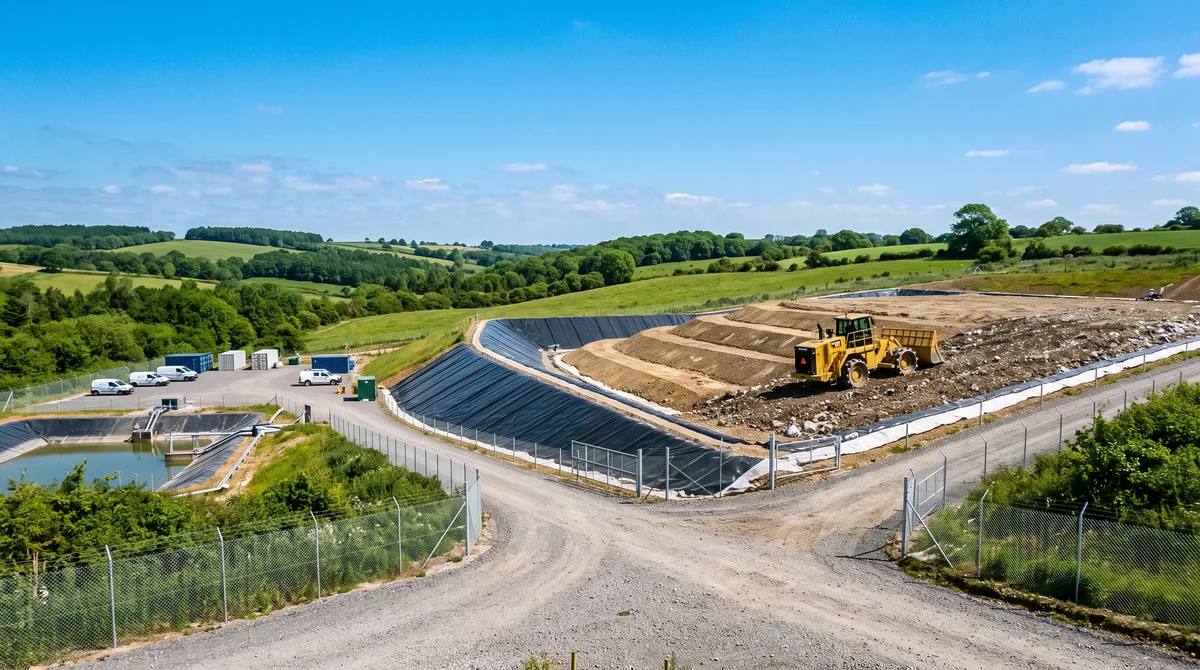
The BF 006 – Yavan Solid Waste Project is a critical infrastructure initiative aimed at modernizing solid waste management in the region of Yavan.
The project is primarily financed through a loan from the European Bank for Reconstruction and Development (EBRD). The complexity of the project, combined with the requirement for international best practices in transparency and governance, led to the adoption of a rigorous, open international tendering process. The process is governed by the EBRD’s Standard Tender Document (STD) for the Procurement of Works, highlighting the fundamental importance of adherence to international contract law (specifically FIDIC) and strict anti-corruption measures.
Procurement Framework
Project Context and Challenge
Solid waste management represents a significant public health and environmental challenge in many developing regions. The Yavan Solid Waste Project was initiated to address these gaps through substantial capital investment in new infrastructure and services. Given the public nature of the works and the use of multilateral development bank (MDB) financing, the primary challenge was two-fold:
- Securing a Technically and Financially Qualified Contractor: The procurement process had to attract and select a contractor capable of executing a complex engineering project under an international contract framework.
- Ensuring Transparency and Accountability: As the project is financed by the EBRD, it is subject to the Bank’s “Principles and Rules for Procurement of Goods, Works, and Services.” This requires the highest ethical standards to prevent corruption, fraud, collusion, and coercive practices, which is a major compliance effort for the client.
Intervention: EBRD-Mandated Open Tendering
To address the challenge of complex procurement and compliance, the project adopted an open tendering method using the EBRD’s , published in January 2011. This document serves as the regulatory and contractual backbone of the entire procurement phase.
The STD is comprehensive, comprising three main parts, ensuring every aspect of the contracting and execution process is standardized and clear to all international bidders:
Part 1: Tender Procedure
This section governs the competition itself. It includes:
- Instructions to Bidders (IUT): Detailed rules on bid preparation, required documentation, bid security, and the submission and opening process. This ensures procedural fairness.
- Conditions of Tender (CT): Contains project-specific data, such as the Client’s name, project details, and any modifications to the standard instructions.
- Evaluation Criteria and Qualification Requirements: These are explicitly quantitative, ensuring that the selection of the “Most Economically Advantageous Tender” is based on objective, measurable criteria, including the minimum required experience.
Part 2: Requirements (Scope of Works)
This crucial section contains the technical heart of the project: the specifications, drawings, and full technical description of the works required. This ensures all bidders base their financial offers on the same technical understanding.
Part 3: Conditions of Contract and Forms
This section mandates the use of internationally recognized contract standards. The document explicitly states it is designed for use with the (Red Book, 1st Edition 1999). FIDIC is the global benchmark for construction contracts, providing a balanced, risk-sharing framework. This part is supplemented by:
- Particular Conditions of Contract (PCC): The mechanism for the Client to introduce project-specific clauses that modify the general FIDIC terms without fundamentally altering the integrity of the framework.
- Contract Forms: Templates for the various guarantees (Bid Security, Performance Security, Advance Payment Guarantee) necessary to protect the Client’s interests.
Key Implementation and Compliance Mechanisms
The EBRD’s requirements are deeply embedded within the procurement timeline and rules, serving as non-negotiable checks and balances:
- Transparency Timeline: The process is structured with a multi-month timeline, including a mandatory period of at least 45 days between the General Procurement Notice (GPN) and the Invitation to Tender (ITT), and a minimum of 45 days (preferably 60 days) for Bidders to prepare their submissions. This ensures maximum global visibility and fair competition.
- Anti-Corruption Measures: The document dedicates a specific, mandatory clause to define and prohibit “Prohibited Practices”—corruption, fraud, coercion, and collusion. The EBRD reserves the right to reject any tender, annul financing, or permanently debar a company if these actions are found to have been committed by the Client’s or a contractor’s representatives.
- Conflict of Interest (COI) Rules: Strict rules prevent any company or affiliated entity that participated in the project’s feasibility study, design, or preparation of the scope of works (Section VI) from bidding on the final construction contract, thereby ensuring impartiality in the tender.
Conclusion and Takeaways
The BF 006 – Yavan Solid Waste Project serves as an exemplary case of MDB-financed infrastructure procurement. The reliance on the EBRD’s Standard Tender Document and the underlying FIDIC contract framework ensures the project is governed by in both contract execution and corporate governance.
Risk Mitigation
The detailed, rule-based approach mitigates the risk of financial misappropriation, legal disputes, and technical failure, positioning the project for successful and sustainable completion, ultimately benefiting the citizens of Yavan.