Uzbekistan has just made energy audits the law. We are setting up a local engineering company in Tashkent to do the work — building audits, equipment inspections and green-passport certification — with Kyrgyzstan next.
This is a new line for us, but not new ground. We have worked on Central Asian infrastructure since 1997, and energy efficiency is a discipline Switzerland knows well. We are building the team, the local entity and the instruments now, ahead of a launch over the coming months.
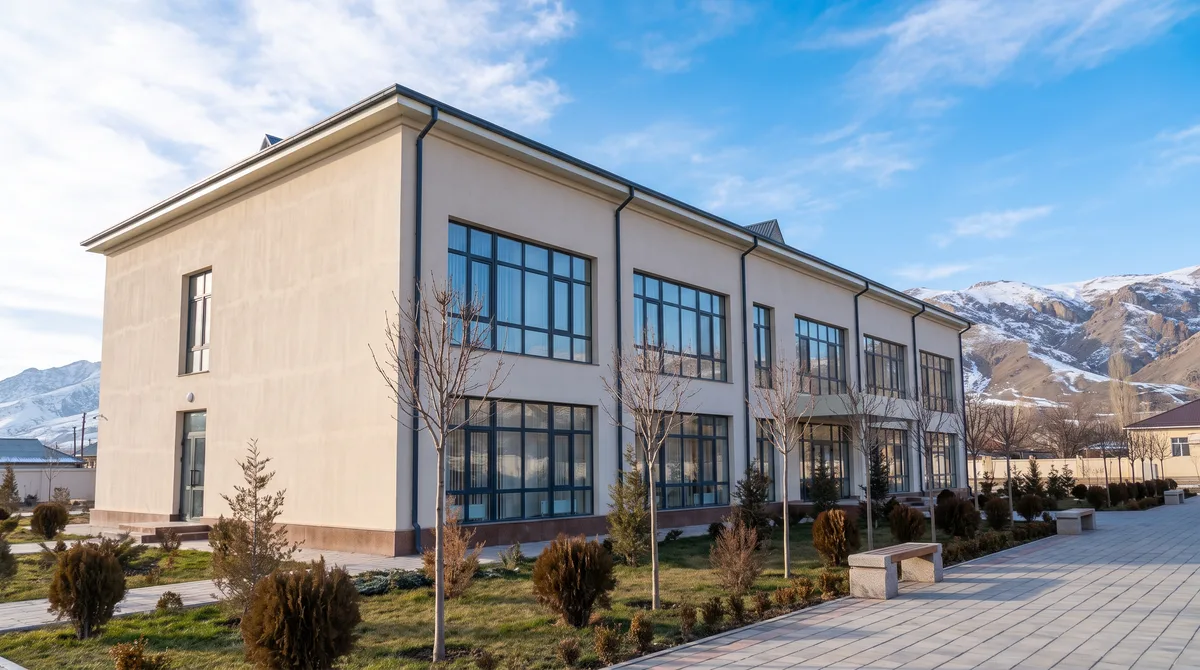
For years, energy efficiency in Central Asia moved almost entirely on donor money, because the rules that make audits routine simply were not there. That is changing — and Uzbekistan is where it is changing first.
The Law on Energy Saving (ZRU-940) took effect in November 2024. It requires large energy consumers to be audited, accredits and attests the auditors who may sign the work, and puts supervision in the hands of Energonazorat. Buildings sit under the Ministry of Construction. A market that barely existed two years ago now has a rulebook.
Uzbekistan is expected to adopt its building energy standard around the end of 2026. Once it does, green-passport certification becomes the reference document for buildings — and demand for people who can issue it, and audit against it, steps up sharply.
Kyrgyzstan's energy-efficiency framework is still being drafted, and the field there is barely contested. We are positioning early, so that when the tenders come — backed by the ADB, the World Bank and others — we are already on the ground rather than arriving late.
Four services, deliberately not just one. A market this young rewards range — from a quick equipment check to a full certified audit.
A whole-building study: where energy goes, where heat is lost, and which measures would cut consumption — each one costed, so the owner can see the payback before spending. Measured on site with instruments, not estimated from a desk.
Not everyone needs the full study. When the question is narrower — a boiler house, a set of pumps, a heating loop — we inspect the specific equipment, measure how it actually performs, and say plainly what to fix or replace.
The building energy-performance certificate that the new standard will require. It records how a building rates and what its passport figures are — the document owners, buyers and financiers will start asking to see.
A regulated market needs qualified people, and there are not yet enough of them. We train — building on our own certification and on Swiss practice — so local engineers can carry the work, which is how these markets mature.
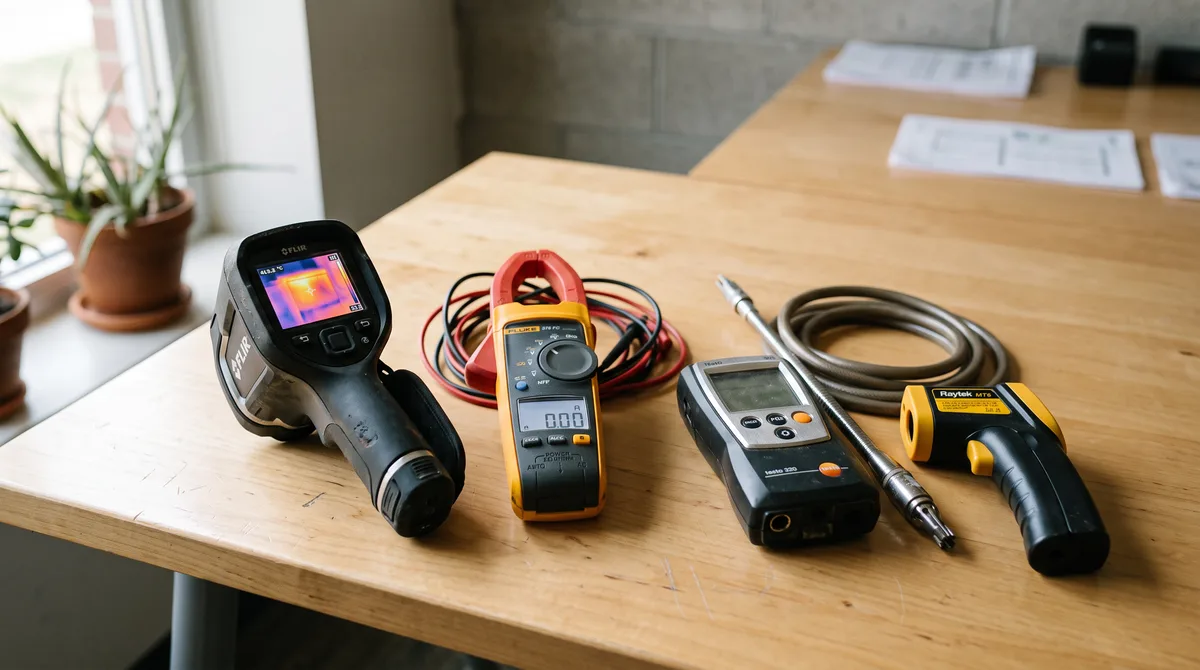
An audit is only worth as much as the numbers behind it. Ours come off calibrated instruments in the building, not off assumptions — thermal imaging to find heat loss, power-quality and energy metering, combustion analysis on boilers, ultrasonic flow measurement, and the rest of a proper field kit.
That matters twice over: the regulation requires audits to rest on verified measurement, and an owner is far more likely to fund a measure when the saving behind it was read off a meter rather than modelled in a spreadsheet.
Energy efficiency is something Switzerland has done seriously for decades, and Swiss-financed programmes are increasingly pointed at energy and water in the region. We bring that standard of work; we bring a team that already includes a certified energy auditor; and we bring nearly thirty years of delivering IFI-funded infrastructure in the very countries where this market is now opening.
By registering locally rather than flying in, the audits carry a signature the regulator recognises — and a team that is still there after the report is signed.
A green passport is an energy-performance certificate for a building — it records how much energy the building consumes and how efficient it is, against a national standard. Uzbekistan is expected to adopt its building energy standard around the end of 2026, at which point green-passport certification becomes the reference document for new and renovated buildings. It answers "how much energy does this building use"; an energy audit goes further and answers "why, and how to reduce it".
Yes. Uzbekistan's Law on Energy Saving (ZRU-940), adopted in August 2024 and in force from November 2024, introduced a mandatory energy-audit regime for large energy consumers, together with accreditation and attestation of auditors and state supervision through Energonazorat. Cabinet of Ministers Resolution No. 690 of October 2024 sets out how audits are conducted and places buildings under the Ministry of Construction. This is a new, supervised market — which is exactly why we are establishing a local presence now.
Building energy certification (the energy passport) certifies how much energy a building consumes — a normative document, comparable to a diagnosis. An energy audit is a deeper engineering study of where energy is lost and which measures would cut consumption, with the savings quantified — comparable to a diagnosis plus a treatment plan. In this region the qualification to sign each is held by an accredited individual, so a firm operates by employing and engaging certified specialists. Our team includes a certified energy auditor.
We are setting the practice up now — the local company, the team and the instruments — with a launch over the coming months. Uzbekistan is first, delivered through a locally-registered company in Tashkent; Kyrgyzstan follows. If you have an assignment in either country, we are already glad to talk.
We are opening this practice for exactly this kind of assignment. Tell us what you are trying to do, and we will tell you plainly how we can help — and when.
Start a conversation